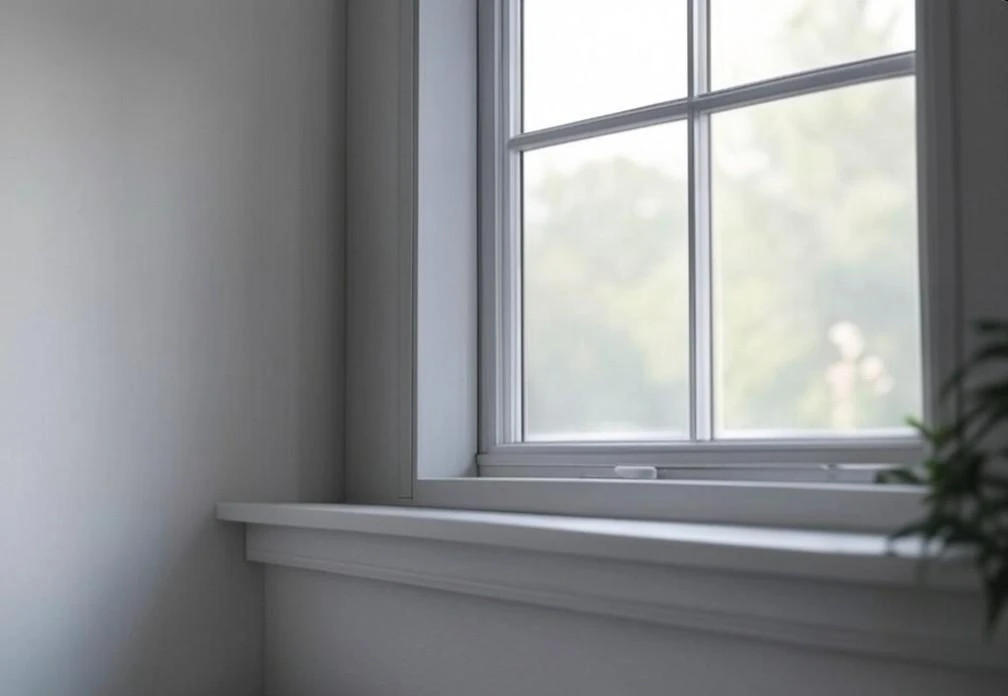
When you plan a window replacement, you probably think about glass quality, energy efficiency, and frame material. But window casing matters just as much for looks and function. Casing frames the window, adds architectural detail, and gives the room a clean, finished look.
Window casing is the decorative molding that surrounds a window, covering the gap between the window frame and the wall. It protects against drafts, moisture, and dust while integrating windows into your home’s design.
Well-chosen window casing can lift the whole look of a room. It defines architectural style, from stark modern trims to intricate Victorian moldings. It can also make windows look larger, making rooms feel brighter and more spacious.
Casing also protects your home. Without casing, gaps between the window and wall can let in drafts, moisture, and dust, leading to energy loss and higher utility bills. Properly installed casing seals those gaps, improving insulation and energy efficiency.
Window casing is often confused with trim, but they serve different purposes. Casing surrounds only the window, while trim refers to all the decorative molding elements in a room, from crown molding to door casings and baseboards.
Matching your casing to the other trim in your house creates a unified look. Or you can choose contrasting colors and patterns to add character and personality to a room.
Casing offers a finishing touch and insulation, while trim helps define the layout and flow of a space. Knowing this helps you choose the right styles.
The window frame is part of the window unit itself, while the casing is an added design element for appearance and function. Choosing the right pair gives your home a finished, integrated look.

Ask AI about this article:
Towns we serve & Cases45 towns
Every town below has its own page: local projects, typical prices and the crew that works there.
Free online quote in minutes, or talk to a project manager today.