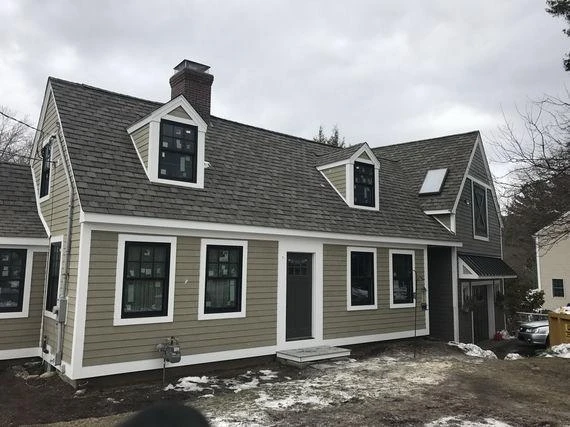
When you're picking a roof in New England, three things matter most: how long it lasts, how it handles snow and ice, and what you can spend. Here are the roofing types we install most around Greater Boston, with honest pros and cons. Lifespans are typical ranges. Ventilation, installation quality, and shade can shift them.
Asphalt shingles are on most houses in Massachusetts, for good reason: they're affordable, quick to install and easy to repair.
The weak spot of shingles in our climate is ice dams. That's why Massachusetts code requires an ice barrier (ice and water shield) along the eaves, and why good attic ventilation matters as much as the shingle you pick.
Standing-seam metal roofs commonly last 40 years or more. They shed snow well, resist wind and fire, and suit both modern homes and farmhouses.
More detail is in our guide on how metal roofing is installed.
You see real slate on Victorian and older homes around Boston. Good hard slate can last a century or longer, and nothing looks quite like it. It's heavy, expensive, and repairs need a slate specialist. If you have a slate roof in decent shape, repairing it usually beats replacing it. If you want the look on a new roof, designer asphalt shingles get you close for far less.
Cedar is the traditional roof on Capes and coastal homes. It looks warm, weathers to gray, and lasts about 25-30 years when it's kept clean and can dry out. Shade, moss and trapped leaves shorten that a lot, and cedar roofs need more upkeep and better fire precautions than shingles.
Porches, dormers, additions and many triple-deckers have flat or nearly flat sections. Shingles don't work on these. They need a membrane:
If you've been patching a flat roof with tar, read our guide on when roofing tar is (and isn't) the answer.
Whatever you choose, installation decides most of how long a roof lasts. Tear-off, deck repairs, flashing and ventilation are where cheap jobs cut corners. You can see installed prices for the shingles we use on our roofing pages, and compare low-cost options in our guide to the cheapest roofing materials. Every roof we install comes with our 15-year workmanship warranty.
Ask AI about this article:
Towns we serve & Cases45 towns
Every town below has its own page: local projects, typical prices and the crew that works there.
Free online quote in minutes, or talk to a project manager today.