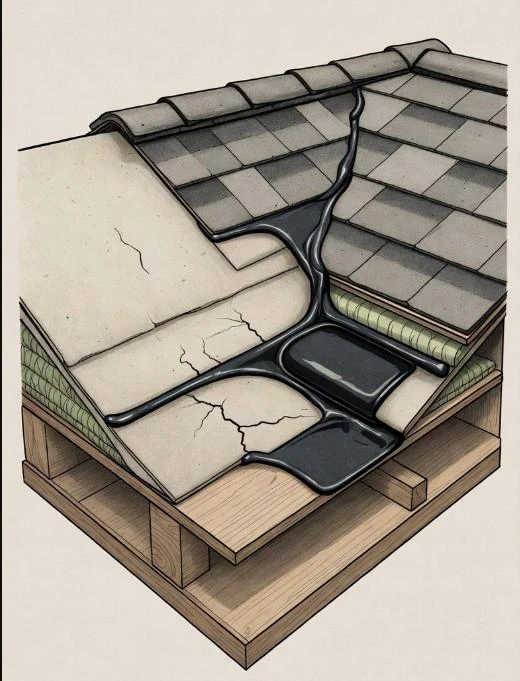
"Can't you just tar it?" is one of the most common questions we hear on leak calls. Sometimes the answer is yes, as a short-term fix. Often it's no, because the tar will hide the real problem or even damage the roof. Here's what roofing tar is and how to use it sensibly.
What people mean by "roofing tar"
The term covers a few different products:
- Asphalt roofing cement (also called plastic cement or flashing cement) is the thick black paste sold in tubs and caulk tubes. This is what most homeowners mean by "tar."
- Coal-tar pitch and hot asphalt are used on old built-up "tar and gravel" flat roofs. These are applied hot by roofing crews, and you'll see them on older triple-deckers and commercial buildings.
- Liquid rubber and elastomeric coatings are paint-on sealers. They're a different chemistry, and only compatible with certain roofs.
Where tar works
- Emergency leak stops: sealing a lifted flashing edge or a cracked seam to get through a storm.
- Small, specific spots: exposed nail heads on flashing, or the edge of a chimney counter-flashing.
- Old built-up flat roofs: patching small blisters and cracks on asphalt roofs, which is compatible material.
In those cases a good patch can hold from a season to a few years. Sun dries the tar out, and freeze–thaw cracks it. Plan to check it every spring and fall.
Where tar does more harm than good
- Rubber (EPDM) and TPO flat roofs: petroleum-based roofing cement is not compatible with these membranes and can damage them. Use the manufacturer's repair tape or patch kit instead.
- Smeared over shingles: tar on shingle surfaces traps water, looks bad, and makes a later proper repair harder. Damaged shingles should be replaced, not coated.
- Covering a flashing problem: leaks at chimneys, walls and skylights are usually missing or failed flashing. Tar over the top just moves the leak a few inches, and the wood keeps rotting where you can't see it.
- A worn-out roof: if the roof is near the end of its life, patches buy weeks, not years.
If you're applying it yourself
- Work only on a dry, clean surface, on a mild day. Roofing cement stiffens in the cold and won't bond to wet or dusty material.
- Spread it with a trowel, about 1/8 inch thick, extending past the damaged area. Thicker isn't better: thick blobs crack sooner.
- For anything larger than a nail hole, embed a strip of reinforcing fabric between two layers.
- Safety first: a properly footed ladder, no roof work when wet or icy, and leave steep roofs to a crew with fall protection.
When to call a roofer instead
Call in a pro if a leak comes back after a patch, shows up in more than one place, starts around a chimney or skylight, or appears after an ice-dam winter. Call too if you see soft decking, or the roof is more than about 20 years old. A proper repair usually means new flashing, replacing damaged shingles, or re-covering a flat section with a modern membrane.
FAQ
Is roofing tar waterproof?
Yes, when it's fresh and well bonded. It loses flexibility as it ages and weathers, which is why tar patches crack after a few seasons.
Can I use roofing tar on a rubber roof?
No. Use EPDM-compatible patch tape or primer and a patch kit. Asphalt products can damage rubber membranes.
How long does a tar patch last?
Anywhere from one season to a few years, depending on sun exposure, movement and how well the surface was prepared.
Is tar a permanent fix for a leak?
Rarely. Treat it as first aid that gives you time to plan the proper repair.
If you're not sure whether your leak is a patch job or a bigger problem, we'll look at it during a free inspection. You can also compare roof replacement options and prices online, or read about the different types of roofing before you decide. Our roofing work carries a 15-year workmanship warranty.