Monday, 22 May 2023 11:27:00 Author Andrii Chernitskiy
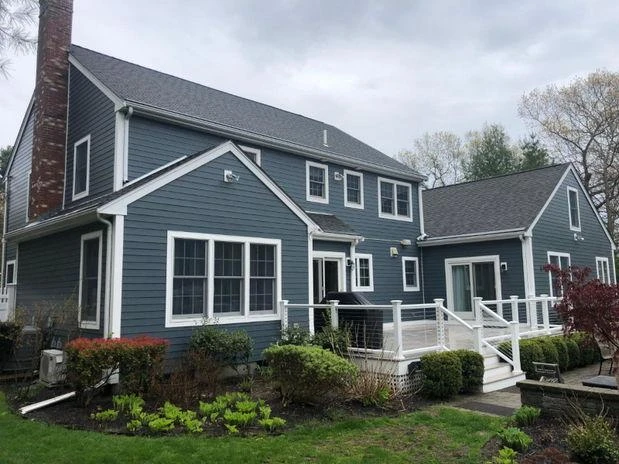
When people ask us about "vinyl decking," they usually mean cellular PVC boards such as AZEK. PVC is a good material: it doesn't absorb water, won't rot, and needs almost no care. It isn't the right fit for every yard or budget, though. Here is how the main alternatives compare, from a crew that builds decks across Greater Boston.
Composite boards, Trex being the best-known, combine wood fibers and plastic under a protective plastic shell. The shell is what resists stains and fading.
We compared the two biggest composite brands for our climate in Trex vs. TimberTech for New England.
Pressure-treated pine is still the most common deck in Massachusetts, and almost every deck uses it for the framing.
Cedar is lighter, more stable and better-looking than pine, and it naturally resists rot. It is also softer, so furniture and dog claws mark it, and it needs the same regular sealing to keep its color. Without that, it weathers to gray. See our wood decks page for current pricing.
These woods are extremely dense, very long-lasting and beautiful. They are also the most expensive, slow to install (every board is pre-drilled), and need oiling if you want to keep the color instead of letting it go silver. They're a great choice for a showpiece deck, and overkill for most backyards.
Use a plastic shovel on PVC and composite, and check the manufacturer's guidance on ice melt. Wood takes a metal shovel better but shows the wear. Every option benefits from proper board gaps so meltwater drains instead of freezing on the surface.
Dark PVC and composite boards get hot in full sun. If your deck faces south with no shade, choose a lighter color, or put samples in the sun and feel them at 3 pm before you decide.
PVC and capped composite need a wash once or twice a year. Wood needs a yearly or every-other-year cleaning and sealing to stay sound and good-looking.
Wood is cheapest on day one. Over 15–20 years, the cost of sealing, plus replacing boards, usually closes most of the gap with composite and PVC.
Almost every deck sits on pressure-treated framing, and a deck only lasts as long as its frame. On composite and PVC decks we protect the tops of the joists with butyl joist tape. In Massachusetts, decks also need a building permit and footings below the frost line, typically 48 inches deep. A good contractor handles both.
You can price Trex and AZEK decks online on our deck pages, and we'll bring board samples to your free consultation. Our deck work is covered by a 15-year workmanship warranty.

Free online quote in minutes — or talk to a project manager today.