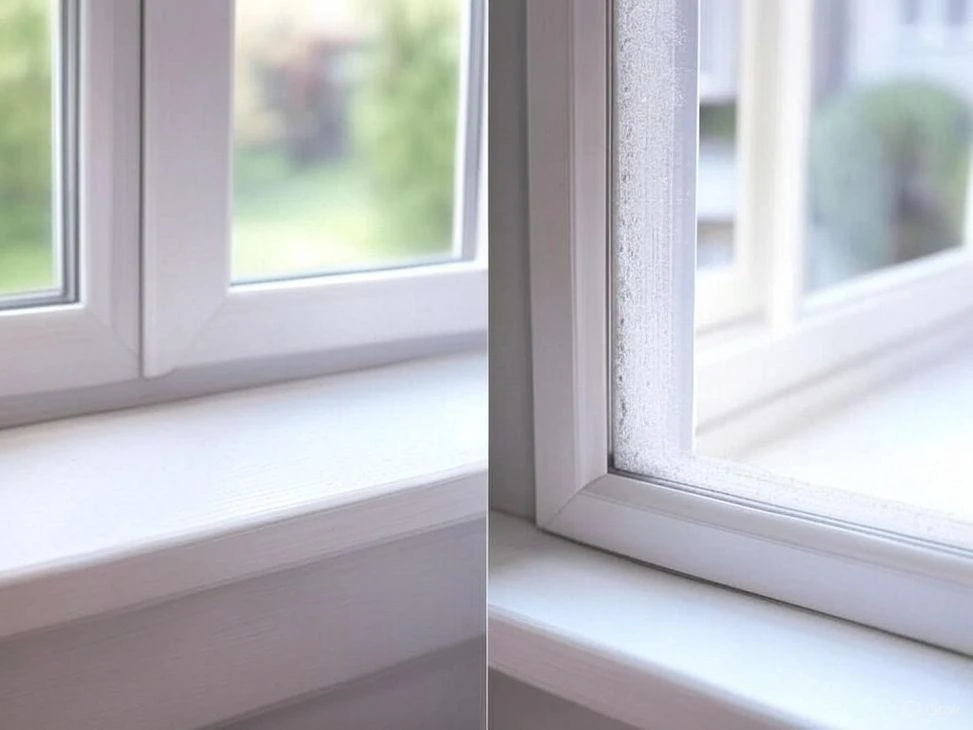
Mold on windows is a serious problem. If you see black mold on windows or frames, act fast. Cleaning it properly helps prevent health risks and damage to your home.
Mold thrives where humidity and moisture are high. Condensation is the most common cause of window mold. When warm, humid indoor air hits a cold window surface, water droplets form. Over time, that moisture leads to mold, especially in poorly ventilated rooms.
Homes undergoing home renovations can also be at risk. Dust, construction debris, and high humidity near window sills and frames encourage mold growth. Fix any moisture leaks right away to stop mold from spreading.
Seal off the area around the window to contain mold spores. Open a window or door for ventilation. Cover the window with plastic sheeting or towels to catch any debris.
Spray the moldy areas on the window frame with vinegar or hydrogen peroxide. These natural cleaners kill mold without harsh chemicals. Let the solution sit for 10 to 15 minutes to break down the mold.
Scrub the window frame with a sponge or soft-bristled brush to remove all mold residue. Pay attention to edges and corners. Do not use abrasive materials that could scratch the surface.
Rinse the window surface with warm water. Dry it completely with paper towels or a microfiber cloth. Any remaining moisture can lead to new mold growth, so make sure every damp spot is dry.
Place all used cleaning materials, like paper towels or sponges, in a sealed plastic bag to keep mold spores from spreading.
Window mold is more than an eyesore. It can affect your home's air quality and your health. Cleaning it and taking preventive steps will keep your home mold-free. If you have persistent condensation or recurring mold, it may be time to call a professional or consider replacing your windows.

Ask AI about this article:
Towns we serve & Cases45 towns
Every town below has its own page: local projects, typical prices and the crew that works there.
Free online quote in minutes, or talk to a project manager today.