Monday, 25 July 2022 04:15:00 Author Andrii Chernitskiy
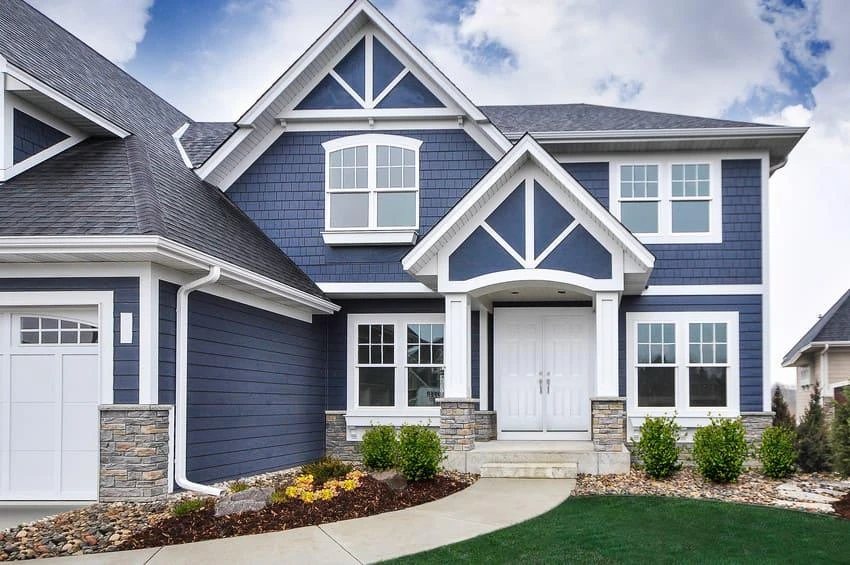
Most homeowners we meet already know they want James Hardie fiber cement. The harder question is the color. It is the one decision you will look at every day, and with fiber cement it is also a long commitment, because the boards themselves last decades. Here is what actually makes Hardie colors different from other siding, and the method we use with clients around Framingham and Greater Boston to choose one.
Hardie boards come two ways: primed, to be painted after installation, or with a factory finish called ColorPlus. ColorPlus is applied in multiple coats and baked on in a controlled plant, so it goes on evenly and cures properly whatever the weather is doing on your street. That matters in Massachusetts, where the paint season is short and a cold, damp October can ruin a site-applied coat.
Primed boards still make sense if you want a custom color, or a house that matches a historic palette exactly. Just plan for repainting on a normal paint cycle.
James Hardie makes its products for different climate zones. Homes in New England get the HZ5 line, built for freeze–thaw cycles, snow sitting against walls, and big temperature swings between seasons. Whatever color you choose, make sure the board under it is HZ5.
The Statement Collection is a short list of the most popular colors for each region, and the one we quote from most often. The Dream Collection opens up hundreds of additional colors at a higher price and longer lead time. If you're torn between two Statement colors, that is usually a better problem to have than choosing from five hundred.
Popular choices on our recent jobs include Arctic White for trim and crisp farmhouse looks, Cobblestone and Timber Bark for warm neutrals, Iron Gray and Night Gray for modern contrast, and Boothbay Blue and Evening Blue when people want a coastal New England feel.
Your roof, stone or brick, and often the windows are staying. Lay the samples next to those first. A warm brown roof fights a cool blue-gray siding; a charcoal roof works with almost anything except very dark siding, which can make the house read as one dark block.
Small chips lie. Ask for full-size samples and look at them in morning and late-afternoon light, on the north side and the sunny side of the house. Gray and greige colors in particular can lean blue, green or beige depending on the light.
Color on a whole wall reads lighter and brighter than on a sample. If you are between two shades, the darker one is often closer to what you pictured.
Siding, trim, door and shutters work as a set. A common, safe plan is body color plus Arctic White trim; a more modern one is body and trim in the same color with a contrasting front door. Settle this before you order, because trim comes in fewer colors than siding.
Some towns have historic districts, and some neighborhoods have associations with color guidelines. A quick check before ordering saves a painful conversation later.
You can price Hardie clapboards, Hardie shakes and board and batten online in a few minutes. When we come out for the free consultation, we bring full-size color samples so you can see them against your own roof and windows. Every siding job we install comes with our 15-year workmanship warranty, on top of the manufacturer's coverage.

Free online quote in minutes — or talk to a project manager today.